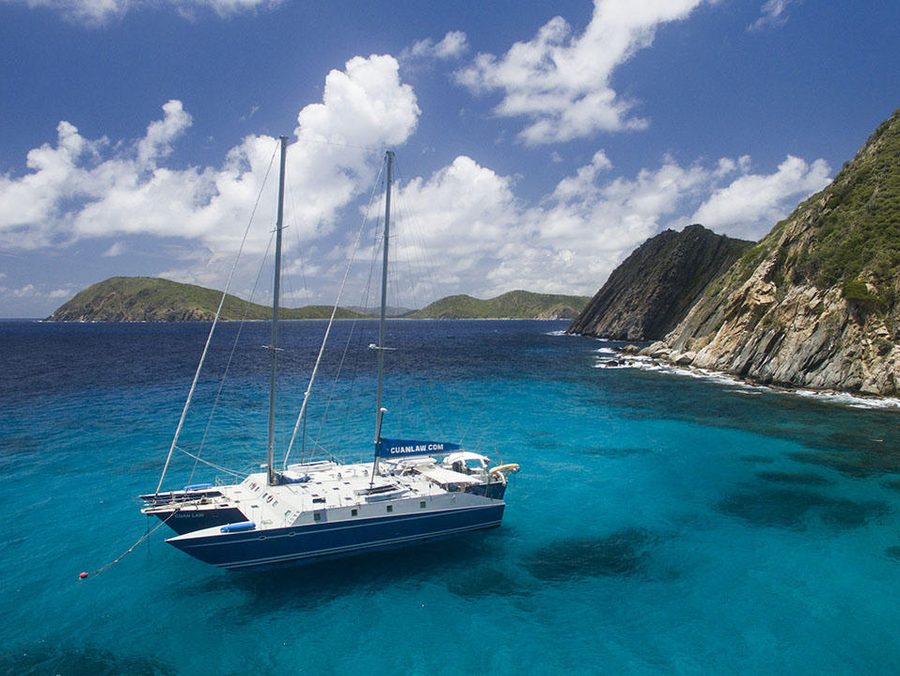
Cuan Law is a 105-foot aluminum trimaran, 44 feet across, built in 1988 for one purpose: a week of diving and sailing in the British Virgin Islands, with a bed for every guest and a crew that does not leave. A week starts at $65,200. A cabin can also be taken on its own. Tell us the dates and we will see that she is free.
How she came to be
Duncan and Annie Muirhead began with a boat called Misty Law in 1969. They crossed the Atlantic, summered in Greece, and wintered in the islands. In the early 1970s they stayed, and they were among the first to run a liveaboard dive boat here. The other name from that beginning is Paul Humann, in the Caymans.
The first trimaran, Lammer Law, was designed by Duncan and built in 1978. Annie wanted more beds. Cuan Law followed in 1988, welded aluminum, designed by the owners and built in Wheatley, Ontario. The hull was launched on Lake Erie, taken through the Welland Canal, and finished on Lake Ontario beside her sister. Then she came south. The name is Scots. Cuan is the ocean. Law is a mountain. She was built to look like one rising out of the water.
She has been called the largest sailing trimaran in the world. Two masts, 5,200 square feet of sail, 75 tons with fuel and water. Two Caterpillar diesels. She is still the boat the Muirheads built for this water.
Who is aboard
A week carries seven. A captain, a chef, an engineer, two dive guides, and two stewards. The galley has been in good hands for years. Divers and the people who stay on deck are the same party. Tell us the dates and we will introduce who is aboard.
The diving
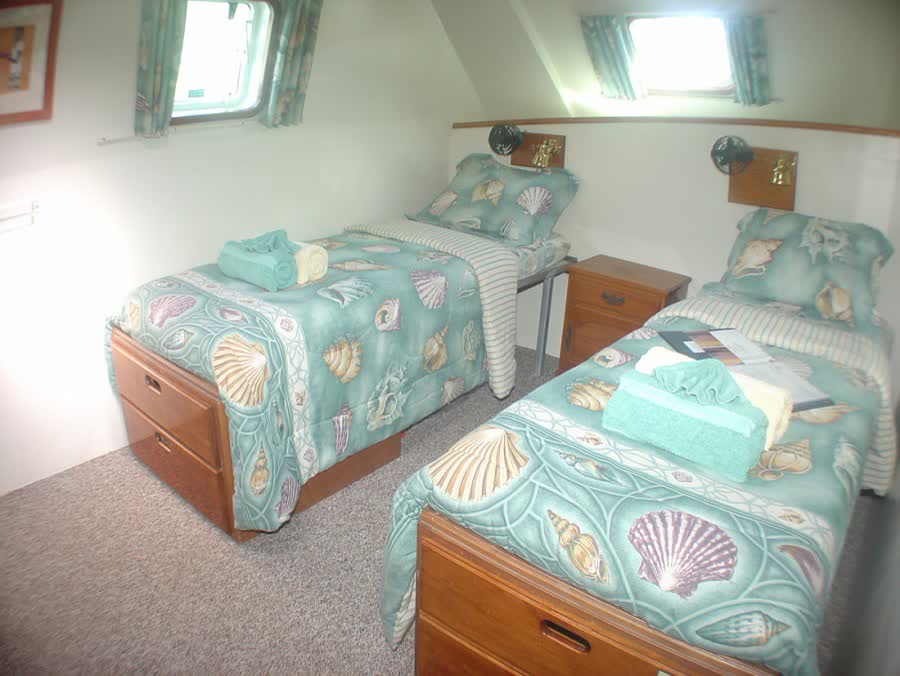
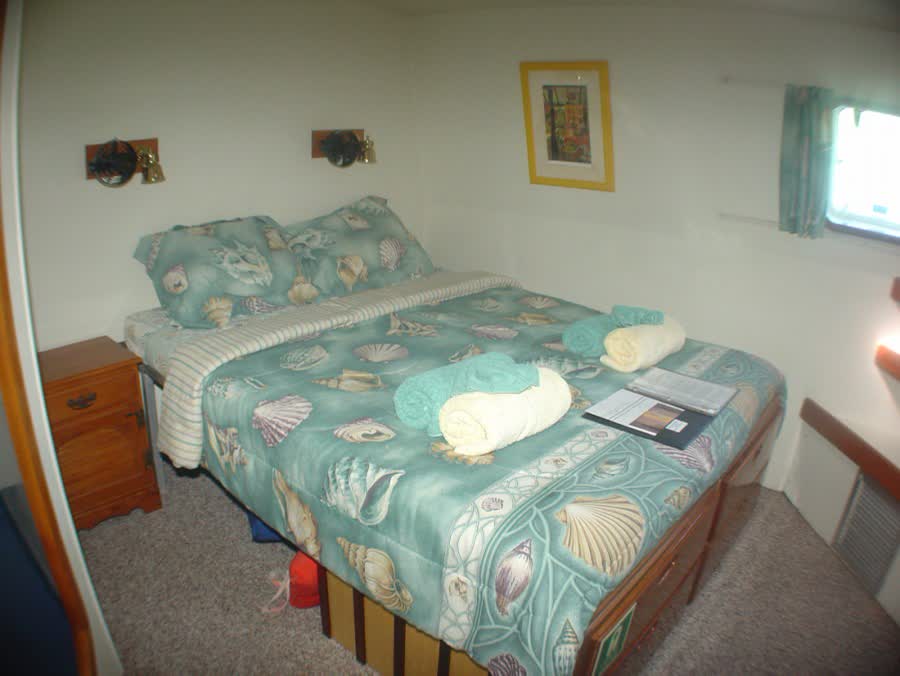
This is a dive hotel that sails. Ten cabins, each with its own head, a queen or twins. The compressors are on board, and so is nitrox. The morning dive is early. The afternoon dive is after lunch. A night dive when the group wants it. The wrecks and the reefs of these islands are the point of the week, and the boat is the hotel between them. If half the party would rather stay on deck, the stewards and the chef are still there.
How the week goes
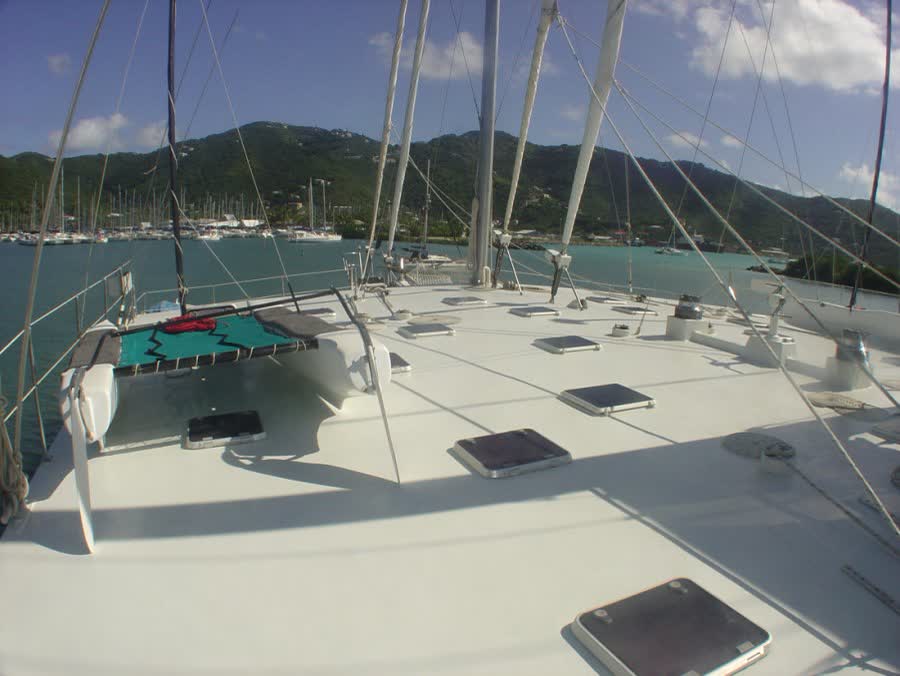
You board in Tortola. The first night is a short sail, so a late flight does not spoil it. Then the wrecks: the Rhone when the landing is kind, the reefs off Norman and Peter, a day toward Virgin Gorda if the sea allows. Between dives the deck is the living room. Kayaks, a swim, a book, a nap in the shade of the hard top. Friday is a last dive and the dock in time for a Saturday flight.
One meal
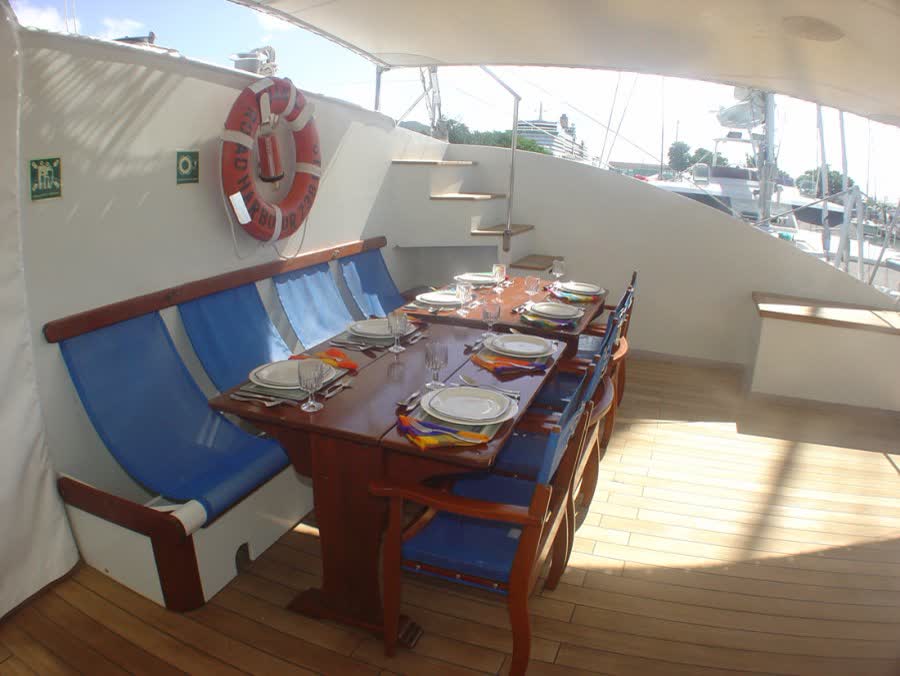
Lunch is served on the covered aft deck, between the morning dive and the afternoon one. Grilled fish, a salad, and something cold to drink while the tanks are filled. Dinner is the long sitting: a proper plate, a select wine, and the lights of the next island if the anchorage gives them. Breakfast is before the first splash. Tell us what you do not eat before you fly.
A floating dive hotel, under sail.
That is the week. Twenty guests, or a cabin of your own. The rate is for the boat. The crew is already aboard.